




































Europe Faces Major Potato Supply Pressure After Heatwaves and Drought Cut Harvest Prospects
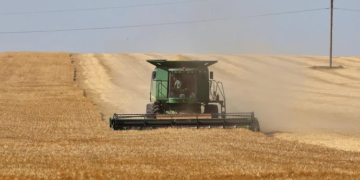
Europe’s potato industry is facing a difficult harvest season after an exceptionally hot and dry summer damaged crops across several of the continent’s major potato-producing regions.
A recent analysis by the Energy and Climate Intelligence Unit (ECIU) estimates that drought and extreme summer weather could reduce potato production by around 3.1 million tonnes across Germany, France, Belgium and the Netherlands. When Great Britain is included, the potential production loss rises to more than 3.5 million tonnes.
The estimated losses across the five countries could be worth between approximately €498 million and €818 million, depending on prevailing potato prices. The four major Eurozone producers alone could account for losses of between €405 million and €622 million.
Heat and Drought Hit Key Growing Regions
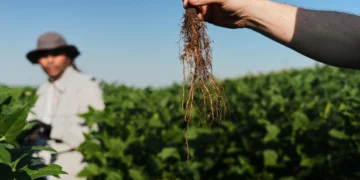
Potatoes are particularly sensitive to prolonged heat and water stress during important stages of tuber development. This year’s combination of high temperatures and limited rainfall has affected both the quantity and quality of potatoes harvested in several parts of Europe.
The European Commission’s Joint Research Centre (JRC) has also documented the broader agricultural impact of the summer weather. Its crop-monitoring assessments reported persistent heat and exceptional water deficits across western and central Europe, affecting crop development, biomass accumulation and yield prospects.
France, Belgium, Germany and the Netherlands have been among the regions facing particularly difficult conditions for summer crops.
Potato Production Faces a Sharp Reversal
The potato sector is experiencing a particularly significant change because the difficult 2026 season follows a very strong harvest in 2025.
According to ECIU’s analysis, production in Germany, France, Belgium and the Netherlands could fall from approximately 27.3 million tonnes in 2025 to between 19.5 million and 20.5 million tonnes in 2026, if current estimates materialise.
The production decline is being compounded by lower planting this year. FreshPlaza, citing figures from the North-Western European Potato Growers (NEPG), reported that planted area in north-western Europe fell by approximately 13.7%, from around 604,000 hectares in 2025 to 521,500 hectares in 2026.
This combination of reduced acreage and lower yields is tightening the supply outlook.
Smaller Potatoes Create Additional Problems
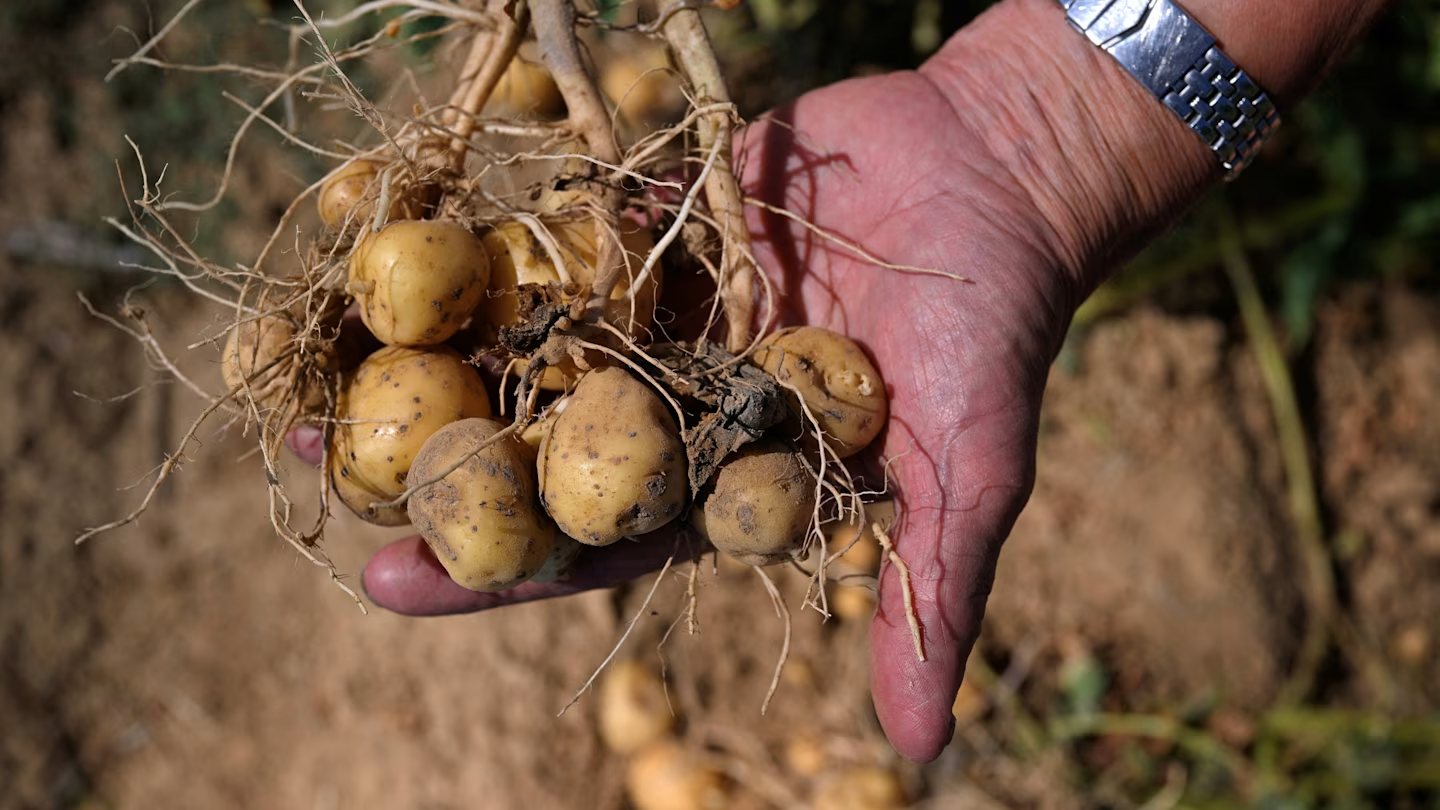
The issue is not simply the total number of tonnes harvested. Extreme heat and drought can also affect potato size and quality, which is particularly important for processors producing frozen fries, chips and other potato-based products.
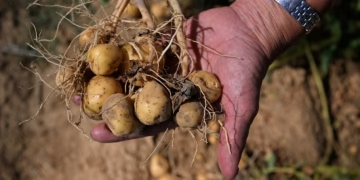
Recent industry reporting indicates that tuber sizes and lengths have been lower in several growing areas. Smaller potatoes can create problems for processors because different products require potatoes to meet particular size and quality specifications.
Farmers can therefore face losses even when they manage to harvest part of their crop, particularly where potatoes fail to meet contracted specifications.
Farmers Face Rising Production Pressure
The weather-related losses are occurring alongside challenging economic conditions for growers.
Some farmers entered contracts or production arrangements based on market conditions established before the full impact of the summer heat and drought became apparent. This has created concerns about whether lower yields will adequately compensate growers for higher production risks.
Industry reporting from the United Kingdom has also indicated that free-market potato prices have risen because of tighter supplies, while some contracted prices have not increased at the same pace.
Potential Impact on Consumers
The supply reduction could eventually have consequences beyond farms and processing plants.
Potatoes are an important ingredient in Europe’s food-processing sector, particularly for French fries, frozen potato products, crisps and prepared foods. A reduction in suitable processing potatoes can place additional pressure on processors and retailers.
However, the precise impact on consumer prices remains uncertain. Existing stocks, imports, contract arrangements and market responses could influence how quickly production losses translate into retail prices.
Reports have already raised concerns that consumers could face smaller or more expensive fries if the supply deficit becomes more pronounced.
Europe’s Wider Climate Challenge
The potato situation is part of a broader agricultural challenge facing Europe as extreme heat and water shortages increasingly affect crop production.
The EU’s JRC reported that repeated heatwaves and limited rainfall during 2026 reduced soil moisture across significant parts of western and central Europe. Its August monitoring bulletin said EU yield forecasts for summer crops had been sharply reduced, with some forecasts falling as much as 14% below the five-year average.
The agricultural effects have varied considerably by region and crop. Some areas of northern and eastern Europe have experienced more favourable conditions, demonstrating that the impact of extreme weather is not uniform across the continent.
Adaptation Becomes Increasingly Important
The latest potato crisis is adding pressure on growers, researchers and policymakers to improve the resilience of European agriculture.
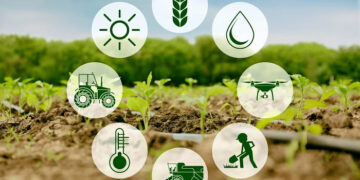
Potential adaptation measures include improved irrigation and water management, better soil-moisture monitoring, drought- and heat-tolerant varieties, changes in planting schedules and more efficient use of agricultural water resources.
For potato growers, maintaining stable production will increasingly depend on the ability to manage both water availability and temperature extremes during critical crop-development periods.
What Comes Next
Europe’s potato market will now closely monitor harvest results, storage conditions and demand from food processors.
The final size of the production shortfall will depend on actual harvested yields and how growers, processors and markets respond. The current estimates therefore represent a significant warning rather than a final assessment of the 2026 European potato harvest.
Nevertheless, the combination of reduced planting, prolonged drought, extreme heat and smaller tubers has already placed substantial pressure on one of Europe’s important agricultural sectors.
The 2026 potato season illustrates how increasingly volatile weather conditions can move rapidly from the farm level into food processing, commodity markets and potentially consumer prices — making climate resilience an increasingly important issue for European agriculture.
#jointresearchcentre #scarcity #shortage #Modernagriculturetimes