































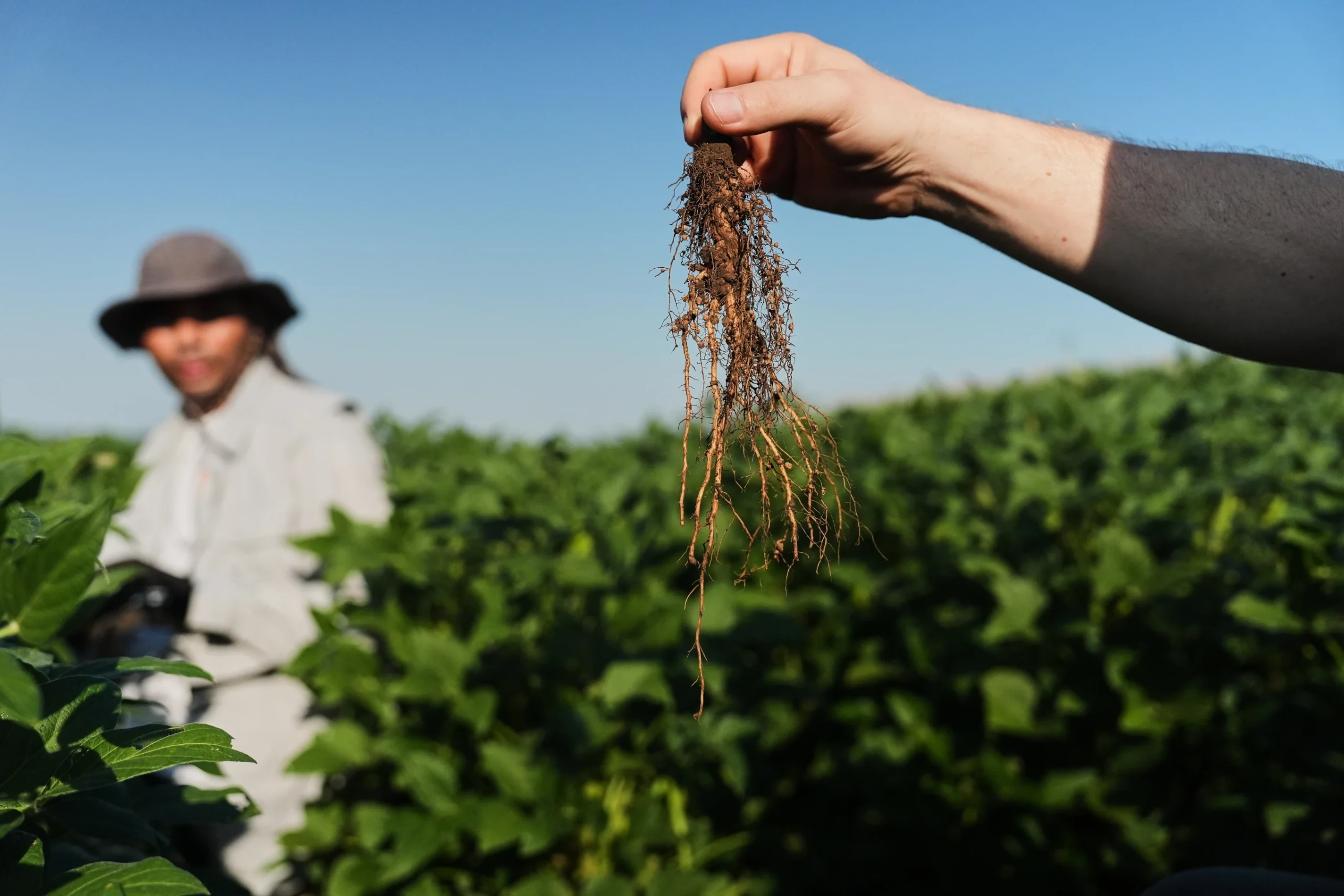
Scientists Test Deep-Rooted Soybeans to Improve Climate Resilience and Store More Carbon
Scientists at the Salk Institute for Biological Studies are testing a new approach to climate-resilient agriculture by developing soybean plants with deeper and larger root systems that could help crops withstand drought while storing additional carbon underground.
The research is part of Salk‘s Harnessing Plants Initiative, which is investigating whether genetically optimised crops can capture more carbon dioxide from the atmosphere and retain it in soils for longer periods. Field trials are now being conducted in several US states to determine whether the technology performs effectively under real agricultural conditions.
Why Deeper Roots Matter
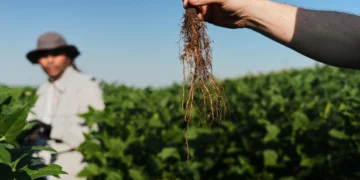
Soybean plants typically develop relatively shallow root systems. Researchers are investigating whether plants with roots that extend farther into the soil can access water and nutrients from deeper layers during periods of drought.
At the same time, larger root systems could transfer more carbon into the soil.
Plants naturally absorb carbon dioxide through photosynthesis and convert it into carbon-containing compounds. When plants die or shed root material, some of that carbon enters the soil. Salk researchers are attempting to increase the amount of carbon that remains underground by developing plants with larger roots containing higher levels of suberin, a carbon-rich substance that decomposes relatively slowly.
From Genetic Research to Field Trials
The project builds on approximately six years of genomic research by Salk scientists.
Researchers studied hundreds of crop varieties and identified 347 candidate genes associated with root growth and carbon-storage characteristics. The team used this information to develop plant lines with traits such as deeper roots, larger root systems and increased suberin content.
Soybean is one of several crops being investigated through Salk’s programme. Other target crops include rice, canola, pennycress and sorghum, with the broader objective of developing plants capable of storing more carbon while maintaining agricultural productivity.
Testing the Technology Under Real Farm Conditions
Laboratory results alone cannot establish whether deeper-rooted crops will provide the same benefits in agricultural environments.
Researchers are therefore conducting field trials in Illinois, Missouri, Kansas and Iowa.
At a field site associated with the University of Illinois Urbana-Champaign, researchers are growing deep-rooted soybean plants under controlled rainfall conditions. A specialised canopy can regulate the amount of rainfall received by the plants, allowing scientists to examine their performance during drought conditions.
Researchers are also using underground cameras and sensing equipment to monitor root development and carbon levels in the soil.
Measuring Carbon Storage
One of the biggest questions for the researchers is how much additional carbon the plants can actually store once they are grown under normal agricultural conditions.
Earlier laboratory research has led Salk scientists to estimate that one hectare of deeper- and larger-rooted soybean plants could potentially store an additional metric tonne of CO₂ per year.
However, the researchers emphasise that field measurements are necessary to determine how much carbon is actually retained and how long it remains underground. Soil type, root depth, agricultural management and other environmental factors can influence the durability of soil carbon.
Suberin Could Help Keep Carbon Underground
A major element of the research is suberin, a naturally occurring carbon-rich polymer found in plant roots and other plant tissues.
Salk researchers are attempting to increase suberin in crop roots because it decomposes more slowly than many other forms of plant material.
The concept is relatively straightforward: plants absorb atmospheric CO₂, incorporate carbon into their tissues and send some of that carbon below ground through their roots. If more carbon-rich root material remains stable in soil, it could contribute to longer-term carbon storage.
Potential Benefits Beyond Carbon Storage
The research could have agricultural applications beyond climate mitigation.
Deeper roots may allow soybean plants to reach water stored deeper in the soil, potentially improving their ability to cope with drought.
Researchers are also investigating whether larger root systems could improve soil health and help plants obtain nutrients more efficiently. Salk says its broader programme is designed to develop plants with enhanced resilience to environmental stresses while increasing soil carbon.
The researchers are also investigating whether deeper and larger roots could capture more nitrogen and potentially reduce nutrient losses from agricultural soils.
A Major Test for Climate-Smart Agriculture
The field trials are important because agricultural technologies can behave differently outside controlled laboratory conditions.
Scientists still need to establish whether deeper-rooted soybeans can maintain competitive crop yields, withstand different environmental conditions and consistently store additional carbon.
The researchers are therefore measuring several factors simultaneously, including drought resilience, root development, carbon storage and crop productivity.
Scaling the Technology
Salk has established Cquesta, a biotechnology spinout focused on carrying out field trials and commercialising Salk Ideal Plant traits.
The institute’s broader research programme has already produced 38 Salk Ideal Plant lines across five target crops, according to its current programme information. The long-term goal is to combine multiple traits, such as deeper roots, improved drought tolerance and enhanced carbon storage, into commercially useful crop varieties.
For the technology to reach large numbers of farms, researchers will ultimately need cooperation from seed companies, farmers and agricultural organisations, along with evidence that the crops can deliver practical benefits without compromising yields.
Potential Global Climate Impact
Salk researchers see agricultural land as a potential pathway for large-scale carbon removal because crops are already grown across vast areas of the world.
A 2025 modelling study co-authored by Salk researchers estimated that deeper-rooted versions of crops including soybean, corn, cotton and canola could potentially remove up to around one gigatonne of CO₂ annually by 2040 if adopted at large scale in countries where genetically modified crops are already cultivated.
That figure is a modelling estimate rather than a demonstrated field outcome, and actual climate benefits would depend on adoption rates, crop performance, soil conditions and how long the stored carbon remains underground.
The Road Ahead
The current field experiments will provide some of the most important evidence yet about whether the deep-root strategy can work at agricultural scale.
If the plants can demonstrate both competitive agricultural performance and measurable additional carbon storage, the research could open another pathway for combining food production with climate-related objectives.
For now, scientists are continuing to collect field data to determine how the plants perform under drought and other environmental stresses and how much additional carbon their roots can retain in real-world soils.
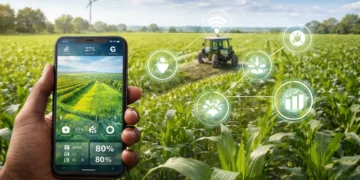
The Salk project illustrates a broader trend in agricultural science: instead of treating crop productivity and climate resilience as separate challenges, researchers are exploring whether genetics, plant biology and precision agriculture can be combined to develop crops that produce food while also delivering environmental benefits.
#soybean #agriculture #salkinstitute #modernagriculturetimes