













































FAO Calls for Better Climate Finance to Strengthen Global Agrifood Systems
The Food and Agriculture Organization of the United Nations (FAO) is calling for stronger and better-targeted climate finance for agriculture and agrifood systems, warning that simply increasing the amount of funding will not be enough to address the growing climate pressures facing farmers, food producers and rural communities.
Agrifood systems are highly exposed to climate change while also playing an important role in addressing it. According to FAO, the sector generates roughly one-third of global greenhouse gas emissions, making investment in climate-resilient and lower-emission agriculture an important part of global climate action.
Focus Shifts From Quantity to Quality
In a joint report with the French Agricultural Research Centre for International Development (CIRAD), FAO examined how climate finance is reaching agrifood systems and whether existing financing mechanisms are suited to the needs of vulnerable countries and communities.
The report, titled “Exploring the quality of climate finance for agrifood systems: an initial review,” argues that discussions around climate finance should focus not only on how much money is mobilised, but also on how the funding is designed, delivered and used.
FAO said existing climate finance can face challenges including limited local ownership, weak coordination, inappropriate financial instruments and an over-reliance on short-term, project-based approaches.
The organisation is therefore advocating for approaches that better reflect local conditions and support longer-term transformation of agricultural and food systems.
Why Agriculture Needs Greater Climate Investment
Farmers are increasingly exposed to climate-related risks such as droughts, floods, heatwaves and changing rainfall patterns. These risks can affect crop yields, livestock, water availability and rural incomes.
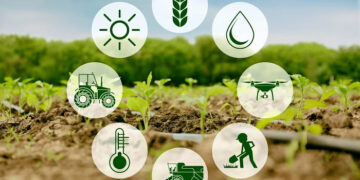
Climate finance can help agriculture respond through investments in areas such as climate-smart farming, improved water management, resilient crop varieties, sustainable land management, early-warning systems and lower-emission technologies.
FAO says its work includes helping countries access financing through channels such as the Green Climate Fund, Global Environment Facility and Adaptation Fund, while also supporting the development of country-led projects focused on climate adaptation and resilient agrifood systems.
Moving Beyond Short-Term Projects
One of the major issues highlighted by the FAO-CIRAD report is the need to move from isolated projects toward more systemic approaches.
According to the report, climate finance programmes can have greater impact when they are connected with national agricultural policies, investment strategies and local institutions rather than operating as standalone projects.
FAO has proposed greater dialogue among governments, financial institutions, climate funds, farmers’ organisations, development agencies and other stakeholders to improve the way climate finance is planned and delivered.
The report also highlights the importance of expanding fiscal and concessional financing space for countries facing financial constraints, particularly where rising debt limits their ability to invest in climate adaptation.
FAO Steps Up Climate-Finance Work
The issue is receiving increased attention during FAO‘s Climate Policy and Finance Week, being held from September 14 to 18, 2026, in Rome.
The week brings together experts, governments, partners and FAO representatives for discussions on climate action, climate finance and loss and damage in agrifood systems.
One of the key objectives is to improve countries’ ability to access climate finance and translate climate commitments into practical agricultural programmes.
FAO‘s Food and Agriculture for Sustainable Transformation (FAST) Partnership is also working to help countries identify funding opportunities and develop investment-ready proposals.
Its finance-support work includes mapping climate-finance opportunities, providing assistance with project proposals and helping countries develop concepts that can potentially attract funding.
Africa Highlights the Scale of the Challenge
The need for greater climate investment is particularly visible in Africa.
A new assessment presented by the AAA Initiative and FAO in September 2026 estimated that 46 African countries had identified combined climate-adaptation needs of about $566 billion across the periods covered by their national plans.
At least $80 billion of that total relates specifically to agriculture, although FAO notes that this is likely a minimum because some countries include agricultural adaptation costs within broader estimates.
The assessment calls for stronger support to help countries develop investment-ready projects and connect national climate plans with financing mechanisms.
Building More Resilient Food Systems
For agriculture, climate finance is increasingly being viewed not simply as environmental funding but as an investment in food security, farmer livelihoods and long-term economic resilience.
Investment can support farmers in adapting production systems while also helping reduce emissions from agriculture and related food supply chains.
FAO‘s current efforts suggest that the next phase of climate finance will need to place greater emphasis on local needs, long-term investment, stronger coordination and measurable outcomes.
As climate risks continue to affect agricultural production around the world, improving both the quantity and quality of climate finance could become an increasingly important factor in building resilient and sustainable food systems.