









































The India-South Africa Joint Working Group On Agriculture Deepens Cooperation In Agriculture With Virtual Meeting
India and South Africa made another important progress in agricultural cooperation through the 5th virtual meeting of the Joint Working Group (JWG) on Agriculture. The meeting comprised of senior officials, researchers and policymakers of both countries to discuss ways to enhance collaboration between our two countries as well as address key issues faced by the agriculture and related sectors.
The meeting was co-chaired by Shri Ajeet Kumar Sahu, Joint Secretary (IC), Department of Agriculture & Farmers Welfare, Government of India; and Mr. Thapsana Molepo, Acting Director, International Trade Promotion, Government of South Africa. The two co-chairs reiterated that this dialogue is an important milestone in advancing interests of both countries, building robust relations between the two countries, and identifying avenues for joint action in agriculture.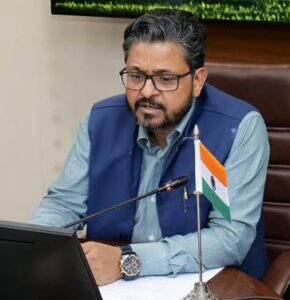
India Displays Agricultural Prowess
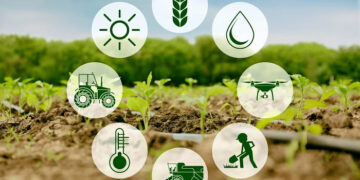
In his speech, Shri Ajeet Kumar Sahu showcased India’s excellent growth in agriculture while demonstrating how the country has become one of the global leaders in food grains, horticulture crops, milk and dairy products, and fisheries. He highlighted some of India’s new policy initiatives and digital initiatives to enhance the agriculture sector, from the use of technology for precision farming to platforms for farmers to access delivery of real-time information, markets, and credit access.
Sahu also underscored the importance of climate-resilient farming practices, noting that India has prioritized sustainability to tackle challenges posed by climate change. Programs promoting soil health, water-use efficiency, and crop diversification were presented as examples of how India is adapting agriculture to meet future demands while safeguarding natural resources.
Additionally, he drew attention to risk mitigation measures such as crop insurance schemes and credit initiatives designed to empower smallholder farmers. These interventions, he explained, are central to ensuring income security and building resilience among India’s vast farming community.
South Africa’s Agricultural Priorities
Mr. Thapsana Molepo gave a brief outline of South Africa’s priorities in agriculture, representing the country. The government’s commitment focuses on capacity-building, extension services and supporting the seed sector as fundamental to enhancing agricultural productivity and food security in South Africa. Molepo restated South Africa’s strong commitment to their partnership with India. The two countries share history and common challenges, such as climate variability, sustainable methods of farming and the need to improve smallholder farmer’s livelihoods. By strengthening cooperation with India, South Africa wishes to gain access to technology, build on knowledge share frameworks, and build resilience in South Africa’s agriculture sector.
Cooperation between Research Councils
One main topic of discussion during the meeting was the opportunity for increased collaboration between the Agricultural Research Council (ARC) of South Africa and the Indian Council of Agricultural Research (ICAR). Both parties identified joint research projects, knowledge exchange opportunities, and capacity-building initiatives as potential areas of collaboration.
The two organizations are expected to work together on subjects such as crop improvement, seed technology, soil health, livestock management, and fisheries development. Discussions also touched upon the potential for addressing market access challenges and promoting bilateral trade in agricultural commodities.
Engagement of Key Stakeholders
The meeting included engagement of senior representatives from many line Ministries and Departments of India, including similar Departments for Agriculture & Farmers Welfare, ICAR, Fisheries, Animal Husbandry & Dairying, and the Ministry of External Affairs. Their participation demonstrated not only the interlinkages among agricultural development, but the direct connection between policy formulation and cross-sectoral alignment.
On the South African side, officials and experts also provided inputs on opportunities to expand bilateral cooperation on, for instance, training farmers, sustainably using resources and innovations in agri-business that particularly could benefit both countries.
#Agriculture#AgriInnovation#AgriCooperation#printpublication
#modernagriculturetimes